Friday, August 21, 2020

How To Protect Your Private Data From Android Apps

protect-private-data-from-apps
In android there is lots of personal data that can be accessed by any unauthorized apps that were installed on the device. This is just because your Android data is openly saved in your file explorer that is not encrypted or protected by encryption method, so, even normal app can also hijack your data very easily as the media access permissions are granted when you click on accept button while installing the apps. And this may be endangering the private data that you might not want to share with anyone. So here we have a cool way that will help you to make your data private by disallowing the apps to access your media files without your permission. So have a look on complete guide discussed below to proceed.

How To Protect Your Private Data From Android Apps

The method is quite simple and just need a rooted android device that will allow the Xposed installer to run on the device. And after having the Xposed installer you will be using an Xposed module to disallow the apps to have access to your personal or say private data. For this follow the guide below.

Steps To Protect Your Private Data From Android Apps:

Step 1. First of all, you need a rooted android as Xposed installer can only be installed on a rooted android, so Root your android to proceed for having superuser access on your android.
Step 2. After rooting your Android device you have to install the Xposed installer on your android and thats quite lengthy process and for that, you can proceed with our Guide to Install Xposed Installer On Android.Xposed Installer
Step 3. Now after having an Xposed framework on your Android the only thing you need is the Xposed module that is DonkeyGuard – Security Management the app that will allow you to manage the media access for apps installed on your device.
Step 4. Now install the app on your device and after that, you need to activate the module in the Xposed installer. Now you need to reboot your device to make the module work perfectly on your device.
Step 5. Now launch the app and you will see all the apps that are currently installed on your device.
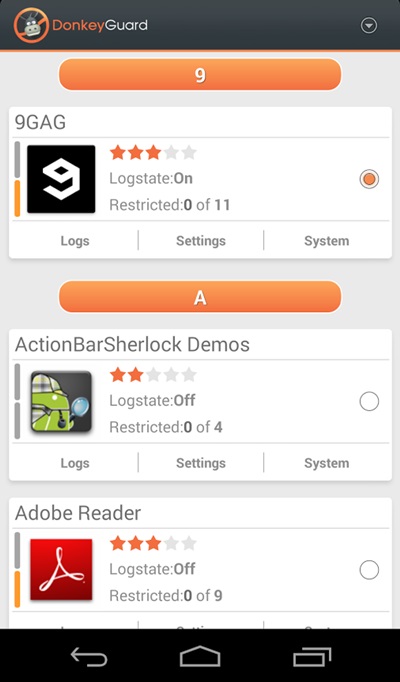
privacy 1
Step 6. Now edit the media permission for the apps that you don't want to have access to your media with private data.privacy 2
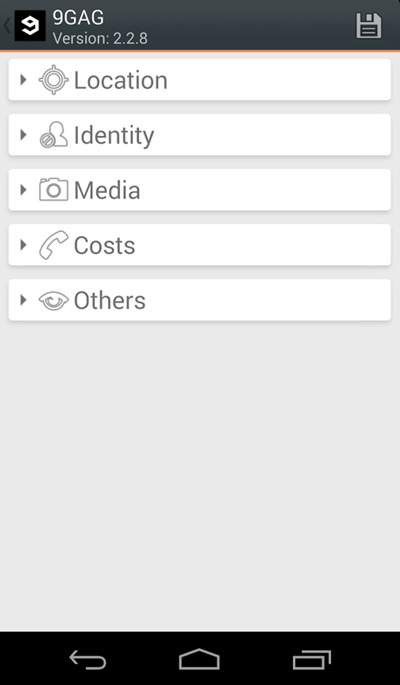
That's it, you are done! now the app will disallow the media access to that apps.

Manually Checking App Permission

Well, our Android operating system offers a nice feature in which we can manage a single app's permission. However, you need to have Android 6.0 Marshmallow or a newer version to get the option.
Step 1. First of all, open Settings and then tap on 'Apps'.
Manually Checking App Permission
Step 2. Now you will see the list of apps that are currently installed on your Android smartphone. Now you need to select the app, and then you will see 'Permissions.'
Manually Checking App Permission
Step 3. Now it will open a new window, which will show you all permissions that you have granted to the app like Camera access, contacts, Location, microphone, etc. You can revoke any permissions as per your wish.
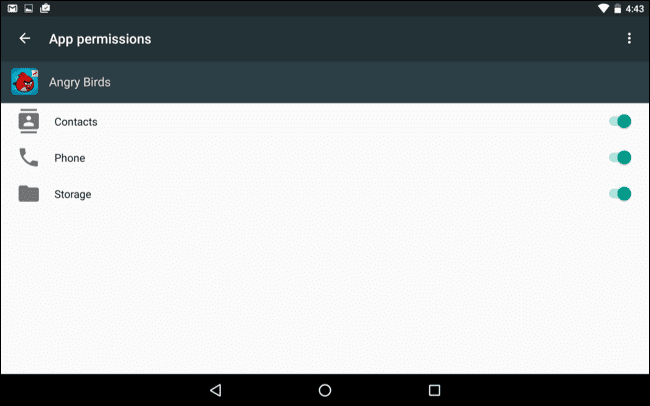
Manually Checking App Permission
Well, the same thing you need to perform if you feel that you have installed some suspicious app on your Android. By this way, you can protect your private data from Android apps.
Related word
  1. Hacker Search Tools
  2. Hack Tools For Games
  3. Hack Tools For Mac
  4. What Are Hacking Tools
  5. Hack Rom Tools
  6. Hacker Tools For Ios
  7. Kik Hack Tools
  8. Hack Tools Github
  9. Blackhat Hacker Tools
  10. Android Hack Tools Github
  11. Pentest Tools Free
  12. Hacker Tools Hardware
  13. How To Make Hacking Tools
  14. Pentest Tools Alternative
  15. Hackers Toolbox
  16. Underground Hacker Sites
  17. Top Pentest Tools
  18. Pentest Recon Tools
  19. Hacker Tools 2020
  20. Hacker Tools Apk
  21. Pentest Tools Download
  22. Hacker Tools Hardware
  23. Pentest Tools Nmap
  24. Hacker Security Tools
  25. Hacking Tools For Mac
  26. Android Hack Tools Github
  27. Computer Hacker
  28. Hack Tools 2019
  29. Hack Tools Online
  30. Hacker Tools Github
  31. Physical Pentest Tools
  32. Pentest Tools For Android
  33. Hacking Tools For Kali Linux
  34. Black Hat Hacker Tools
  35. Hack Tools For Ubuntu
  36. Hacking Tools Download
  37. Hack Tools For Pc
  38. Tools Used For Hacking
  39. Hack Rom Tools
  40. Pentest Tools Alternative
  41. Pentest Tools Website
  42. Tools Used For Hacking
  43. Hack Website Online Tool
  44. Termux Hacking Tools 2019
  45. Pentest Tools Review
  46. Pentest Automation Tools
  47. Pentest Tools For Ubuntu
  48. Pentest Tools Review
  49. Pentest Box Tools Download
  50. Pentest Tools Online
  51. Install Pentest Tools Ubuntu
  52. Hacking Tools For Kali Linux
  53. Install Pentest Tools Ubuntu
  54. Hacker Tools Apk
  55. Nsa Hacker Tools
  56. Hack Tools Pc
  57. Hacker Tools
  58. Hacker Hardware Tools
  59. Hack Tools
  60. Pentest Tools Apk
  61. Hacking Tools
  62. Hacking Tools Usb
  63. Black Hat Hacker Tools
  64. Hack Tools Github
  65. Hacking Tools Kit
  66. Hacker Tools For Windows
  67. Pentest Automation Tools
  68. Hacking Tools Pc
  69. Pentest Recon Tools
  70. New Hacker Tools
  71. Hacking Tools For Mac
  72. Hack Rom Tools
  73. Hacker Tools Apk Download
  74. Hack Tools
  75. Pentest Tools Online
  76. Easy Hack Tools
  77. Bluetooth Hacking Tools Kali
  78. Bluetooth Hacking Tools Kali
  79. Pentest Tools For Android
  80. Hack Tools For Ubuntu
  81. Nsa Hack Tools
  82. Hacker Tools Online
  83. Hack And Tools
  84. Pentest Reporting Tools
  85. Pentest Tools List
  86. Hack App
  87. Termux Hacking Tools 2019
  88. Hack Tools Github
  89. Pentest Tools Open Source
  90. Pentest Tools Android
  91. Hacking Tools For Beginners
  92. Hacking Tools Pc
  93. How To Hack
  94. Pentest Tools Alternative
  95. Pentest Tools Free
  96. Hacker Tools 2020
  97. Pentest Tools For Android
  98. Hacks And Tools
  99. Pentest Tools Url Fuzzer
  100. Hacker Tools Free
  101. Hacking Tools For Games
  102. Tools 4 Hack
  103. Pentest Tools Review
  104. Hackers Toolbox
  105. Kik Hack Tools
  106. Hacker Search Tools
  107. Tools 4 Hack
  108. Pentest Tools Linux
  109. Pentest Tools Open Source
  110. Hacking Tools
  111. Hacking Tools
  112. Pentest Tools Framework
  113. Pentest Recon Tools
  114. Pentest Box Tools Download
  115. Hacker Tools 2020
  116. Hacking Tools 2019
  117. Hacking Apps
  118. Pentest Tools Alternative
  119. Bluetooth Hacking Tools Kali
  120. Beginner Hacker Tools
  121. Hacker Tools Linux

Thursday, August 20, 2020

Gridcoin - The Bad

In this post we will show why Gridcoin is insecure and probably will never achieve better security. Therefore, we are going to explain two critical implementation vulnerabilities and our experience with the core developer in the process of the responsible disclosure. 
    In our last blog post we described the Gridcoin architecture and the design vulnerability we found and fixed (the good). Now we come to the process of responsibly disclosing our findings and try to fix the two implementation vulnerabilities (the bad).

    Update (15.08.2017):
    After the talk at WOOT'17 serveral other developers of Gridcoin quickly reached out to us and told us that there was a change in responsibility internally in the Gridcoin-Dev team. Thus, we are going to wait for their response and then change this blog post accordingly. So stay tuned :)

    Update (16.08.2017):
    We are currently in touch with the whole dev team of Gridcoin and it seems that they are going to fix the vulnerabilities with the next release.


    TL;DR
    The whole Gridcoin currency is seriously insecure against attacks and should not be trusted anymore; unless some developers are in place, which have a profound background in protocol and application security.

    What is Gridcoin?

    Gridcoin is an altcoin, which is in active development since 2013. It claims to provide a high sustainability, as it has very low energy requirements in comparison to Bitcoin. It rewards users for contributing computation power to scientific projects, published on the BOINC project platform. Although Gridcoin is not as widespread as Bitcoin, its draft is very appealing as it attempts to  eliminate Bitcoin's core problems. It possesses a market capitalization of $13,530,738 as of August the 4th 2017 and its users contributed approximately 5% of the total scientific BOINC work done before October 2016.

    A detailed description of the Gridcoin architecture and technical terms used in this blog post are explained in our last blog post.

    The Issues

    Currently there are 2 implementation vulnerabilities in the source code, and we can mount the following attacks against Gridcoin:
    1. We can steal the block creation reward from many Gridcoin minters
    2. We can efficiently prevent many Gridcoin minters from claiming their block creation reward (DoS attack)
    So why do we not just open up an issue online explaining the problems?

    Because we already fixed a critical design issue in Gridcoin last year and tried to help them to fix the new issues. Unfortunately, they do not seem to have an interest in securing Gridcoin and thus leave us no other choice than fully disclosing the findings.

    In order to explain the vulnerabilities we will take a look at the current Gridcoin source code (version 3.5.9.8).

    WARNING: Due to the high number of source code lines in the source files, it can take a while until your browser shows the right line.

    Stealing the BOINC block reward

    The developer implemented our countermeasures in order to prevent our attack from the last blog post. Unfortunately, they did not look at their implementation from an attacker's perspective. Otherwise, they would have found out that they conduct not check, if the signature over the last block hash really is done over the last block hash. But we come to that in a minute. First lets take a look at the code flow:

    In the figure the called-by-graph can be seen for the function VerifyCPIDSignature.
    1. CheckBlock → DeserializeBoincBlock [Source]
      • Here we deserialize the BOINC data structure from the first transaction
    2. CheckBlock → IsCPIDValidv2 [Source]
      • Then we call a function to verify the CPID used in the block. Due to the massive changes over the last years, there are 3 possible verify functions. We are interested in the last one (VerifyCPIDSignature), for the reason that it is the current verification function.
    3. IsCPIDValidv2 → VerifyCPIDSignature [Source]
    4. VerifyCPIDSignature → CheckMessageSignature [Source, Source]
    In the last function the real signature verification is conducted [Source]. When we closely take a look at the function parameter, we see the message (std::string sMsg)  and the signature (std::string sSig) variables, which are checked. But where does this values come from?


    If we go backwards in the function call graph we see that in VerifyCPIDSignature the sMsg is the string sConcatMessage, which is a concatenation of the sCPID and the sBlockHash.
    We are interested where the sBlockHash value comes from, due to the fact that this one is the only changing value in the signature generation.
    When we go backwards, we see that the value originate from the deserialization of the BOINC structure (MiningCPID& mc) and is the variable mc.lastblockhash [Source, Source]. But wait a second, is this value ever checked whether it contains the real last block hash?

    No, it is not....

    So they just look if the stored values there end up in a valid signature.

    Thus, we just need to wait for one valid block from a researcher and copy the signature, the last block hash value, the CPID and adjust every other dynamic value, like the RAC. Consequently, we are able to claim the reward of other BOINC users. This simple bug allows us again to steal the reward of every Gridcoin researcher, like there was never a countermeasure.

    Lock out Gridcoin researcher
    The following vulnerability allows an attacker under specific circumstances to register a key pair for a CPID, even if the CPID was previously tied to another key pair. Thus, the attacker locks out a legit researcher and prevent him from claiming BOINC reward in his minted blocks.

    Reminder: A beacon is valid for 5 months, afterwards a new beacon must be sent with the same public key and CPID.

    Therefore, we need to take a look at the functions, which process the beacon information. Every time there is a block, which contains beacon information, it is processed the following way (click image for higher resolution):


    In the figure the called-by-graph can be seen for the function GetBeaconPublicKey.
    We now show the source code path:
    • ProcessBlock → CheckBlock [Source]
    • CheckBlock → LoadAdminMessages [Source]
    • LoadAdminMessages → MemorizeMessages [Source]
    • MemorizeMessages → GetBeaconPublicKey [Source]
    In the last function GetBeaconPublicKey there are different paths to process a beacon depending on the public key, the CPID, and the time since both were associated to each other.
    For the following explanation we assume that we have an existing association (bound) between a CPID A and a public key pubK_A for 4 months.
    1. First public key for a CPID received [Source]
      • The initial situation, when pubK_A was sent and bind to CPID  A (4 months ago)
    2. Existing public key for a CPID was sent [Source]
      • The case that pubK_A was resent for a CPID A, before the 5 months are passed by
    3. Other public key for a CPID was sent [Source]
      • The case, if a different public key pubK_B for the CPID A was sent via beacon.
    4. The existing public key for the CPID is expired
      • After 5 months a refresh for the association between A and pubK_A is required.
    When an incoming beacon is processed, a look up is made, if there already exists a public key for the CPID used in the beacon. If yes, it is compared to the public key used in the beacon (case 2 and 3).
    If no public key exists (case 1) the new public key is bound to the CPID.

    If a public key exists, but it was not refreshed directly 12.960.000 seconds (5 months [Source]) after the last beacon advertisement of the public key and CPID, it is handled as no public key would exist [Source].

    Thus, case 1 and 4 are treated identical, if the public key is expired, allowing an attacker to register his public key for an arbitrary CPID with expired public key. In practice this allows an attacker to lock out a Gridcoin user from the minting process of new blocks and further allows the attacker to claim reward for BOINC work he never did.

    There is a countermeasure, which allows a user to delete his last beacon (identified by the CPID) . Therefore, the user sends 1 GRC to a special address (SAuJGrxn724SVmpYNxb8gsi3tDgnFhTES9) from an GRC address associated to this CPID [Source]. We did not look into this mechanism in more detail, because it only can be used to remove our attack beacon, but does not prevent the attack.

    The responsible disclosure process

    As part of our work as researchers we all have had the pleasure to responsible disclose the findings to developer or companies.

    For the reasons that we wanted to give the developer some time to fix the design vulnerabilities, described in the last blog post, we did not issue a ticket at the Gridcoin Github project. Instead we contacted the developer at September the 14th 2016 via email and got a response one day later (2016/09/15). They proposed a variation of our countermeasure and dropped the signature in the advertising beacon, which would result in further security issues. We sent another email (2016/09/15) explained to them, why it is not wise to change our countermeasures and drop the signature in the advertising beacon.
    Unfortunately, we did not receive a response. We tried it again on October the 31th 2016. They again did not respond, but we saw in the source code that they made some promising changes. Due to some other projects we did not look into the code until May 2017. At this point we found the two implementation vulnerabilities. We contacted the developer twice via email (5th and 16th of May 2017) again, but never received a response. Thus, we decided to wait for the WOOT notification to pass by and then fully disclose the findings. We thus have no other choice then to say that:

    The whole Gridcoin cryptocurrency is seriously insecure against attacks and should not be trusted anymore; unless some developers are in place, which have a profound background in protocol and application security.

    Further Reading
    A more detailed description of the Gridcoin architecture, the old design issue and the fix will be presented at WOOT'17. Some days after the conference the paper will be available online.

    Related links


    1. Hacking Tools Windows
    2. Pentest Tools Subdomain
    3. Hacker Tools Online
    4. Hack Tools For Ubuntu
    5. Hack Tools
    6. Pentest Tools Url Fuzzer
    7. Hacking Tools Free Download
    8. Pentest Tools Github
    9. Hacker Tools Free Download
    10. Hack App
    11. Underground Hacker Sites
    12. Install Pentest Tools Ubuntu
    13. Hacking Tools Kit
    14. Install Pentest Tools Ubuntu
    15. Pentest Box Tools Download
    16. Pentest Tools For Windows
    17. Hacking Tools For Kali Linux
    18. Hacking Tools Software
    19. Hacking App
    20. Hacking Tools
    21. Hack Tool Apk No Root
    22. Hacking Tools Pc
    23. Hack Tools For Pc
    24. Pentest Tools Framework
    25. Hack Website Online Tool
    26. Pentest Tools List
    27. Pentest Tools Review
    28. Pentest Tools Subdomain
    29. Nsa Hack Tools Download
    30. Hacker Tools
    31. Hack Rom Tools
    32. Hack Tools For Mac
    33. Pentest Tools Tcp Port Scanner
    34. Hacking Tools Windows
    35. Hacking Tools For Windows
    36. Hacking Tools Github
    37. Pentest Tools Android
    38. Physical Pentest Tools
    39. Hacking Apps
    40. Hacking Tools Free Download
    41. Hack App
    42. Github Hacking Tools
    43. Nsa Hacker Tools
    44. Hacking Tools Software
    45. Pentest Reporting Tools
    46. Pentest Tools Linux
    47. Blackhat Hacker Tools
    48. Hacking Tools Windows 10
    49. Hacker Tools For Windows
    50. Pentest Tools Kali Linux
    51. Growth Hacker Tools
    52. Black Hat Hacker Tools
    53. Hack Tools Github
    54. Hacker Tools Apk
    55. New Hack Tools
    56. How To Hack
    57. Pentest Tools Website Vulnerability
    58. Hack Tools For Windows
    59. Hacking Tools For Mac
    60. Black Hat Hacker Tools
    61. Github Hacking Tools
    62. Kik Hack Tools
    63. Hacker Tools 2020
    64. Android Hack Tools Github
    65. Hack Tools For Mac
    66. Black Hat Hacker Tools
    67. What Is Hacking Tools
    68. Hacking Tools Hardware
    69. Best Hacking Tools 2020
    70. Hacker Tools 2019
    71. Hacking Tools Kit
    72. Hacker Tools 2020
    73. Hacking Tools 2019
    74. Pentest Tools Tcp Port Scanner
    75. Bluetooth Hacking Tools Kali
    76. Hacking Tools For Games
    77. Hacker Tools For Ios
    78. Hack Tools For Ubuntu
    79. Bluetooth Hacking Tools Kali
    80. Hacker
    81. Hacking Tools Windows
    82. Computer Hacker
    83. Hack Tool Apk No Root
    84. Hack Tools Download
    85. New Hack Tools
    86. Top Pentest Tools
    87. Hacker Tools For Mac
    88. Hack Tools For Mac
    89. Hack Tools
    90. Hacker Tools Free
    91. Hacking Tools Name
    92. New Hack Tools
    93. Pentest Recon Tools
    94. Hacker Tools Linux
    95. Pentest Reporting Tools
    96. Nsa Hack Tools Download
    97. Hacking Tools Name
    98. Usb Pentest Tools
    99. Best Hacking Tools 2020
    100. Hacker Techniques Tools And Incident Handling
    101. Pentest Tools For Android
    102. Pentest Recon Tools
    103. Hacks And Tools
    104. Pentest Tools Tcp Port Scanner
    105. Pentest Tools Online
    106. Hacker Tools 2020
    107. Hacking Tools For Games
    108. How To Hack

    Hacking Facebook By Using PHP Script | Social Engineering Attack | LAN And WAN (Same Or Different Networks)


    This Video is absolutely for Educational Purposes only, please don't do any illegal activity. If you do then I'm not responsible for your illegal activity. The purpose of this video is to show you How hackers can hack your social media by using their own local servers.

    Basically these type of attacks  known as Social Engineering attacks or Phishing. Attacker just send the duplicate vulnerable HTML page to the victim, when victim enters any type of information to that vulnerable page it'll automatically received by the attacker.

    Phishing is a form of fraud in which an attacker masquerades as a reputable entity or person in email or other communication channels. The attacker uses phishing emails to distribute malicious links or attachments that can perform a variety of functions, including the extraction of login credentials or account information from victims.

    How phishing works 

    Phishing attacks typically rely on social networking techniques applied to email or other electronic communication methods, including direct messages sent over social networks, SMS text messages and other instant messaging modes.

    Phishers may use social engineering and other public sources of information, including social networks like LinkedIn, Facebook and Twitter, to gather background information about the victim's personal and work history, his interests, and his activities.

    Hacking by PHP

    As PHP is server side scripting language so first of all you have need to install a local server (WAMP, XAMPP or LAMPP) over your system. Because if there is no any server running on your system then you can't even run your PHP script. So if you wanna do a programming with PHP this is the first step to download and install a server from the Internet. You can easily download and install servers by watching my videos. Just visit my YouTube channel and watch there.